
More Option
Common Challenges When Using the AMD XCZU47DR-2FFVE1156I Zynq UltraScale+ RFSoC
BY: GALAXY
6 hours ago
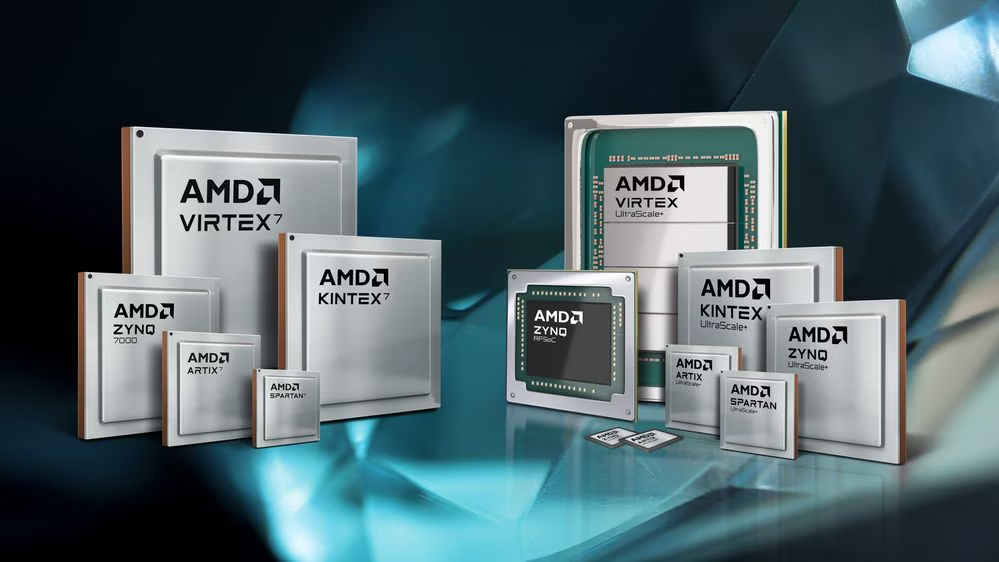 The AMD XCZU47DR-2FFVE1156I is a highly integrated Zynq UltraScale+ RFSoC device that combines RF data converters, FPGA fabric, and multi-core processing capabilities in a single chip. While it provides exceptional performance for radar, wireless communications, and software-defined radio (SDR) applications, developers often encounter challenges related to power sequencing, RF interface design, and heterogeneous system development.
Among these issues, power-related problems are often the most difficult to diagnose during hardware bring-up.
1. Power Sequencing and Leakage Path Issues
Power sequencing is one of the most commonly overlooked aspects when working with RFSoC devices due to their complex multi-rail power architecture.
Symptom
Before the main system power rail (such as 3.3V) is enabled, a digital multimeter may detect a slowly rising voltage of approximately 0.45V on rails such as MGTAVTT (1.2V) or VCC_PSAUX (1.8V).
This condition may cause the PS_ERROR_OUT pin to assert high, preventing the Processing System (PS) from completing initialization.
Root Cause
In most cases, the issue is not caused by a faulty power regulator.
Instead, it is typically the result of reverse current injection through unintended leakage paths. When FPGA I/O pins or transceiver interfaces receive voltage from external devices (such as clock generators or connectors) before the corresponding power rails are fully powered, current can flow backward through the device’s internal ESD protection diodes. This creates a pre-bias voltage on core power rails.
Recommended Solutions
Follow the Recommended Power-Up Sequence
For RFSoC devices, the following sequence is generally recommended:
VCC_PSAUX → VCC_PSINTFP → VCC_PSINTLP → VCC_PSPLL → VCC_INT → VCC_BRAM → MGTAVCC/MGTAVTT
Power-down sequencing should follow the reverse order.
Verify I/O Voltage Compatibility
Ensure that all external devices connected to the FPGA do not drive signals before the associated FPGA bank VCCO rail becomes valid.
Check Power-Good and Enable Signals
Verify that the Power Good (PG) and Enable (EN) signals are correctly configured so that downstream regulators are enabled only after upstream rails have stabilized.
2. RF-ADC and RF-DAC Configuration Challenges
The integrated RF data converters are the key advantage of the XCZU47DR, but they also introduce several common design pitfalls.
Issue 1: Misunderstanding ADC/DAC Full-Scale Range
Symptom
Although the RF-ADC provides 14-bit resolution, data is transferred through a 16-bit AXI-Stream interface.
Many developers incorrectly assume that the full-scale digital range is:
±32768
However, RFSoC converter data is MSB-aligned, meaning the lower two bits are not valid conversion data.
Correct Interpretation
The actual full-scale digital range is:
±16384
Using ±32768 in signal processing or power calculations can result in significant measurement errors.
Recommendation
Treat the converter output as a 14-bit effective value when performing software-based signal and power calculations.
Issue 2: Significant Signal Attenuation in the 5–6 GHz Band
Symptom
Although the device supports an analog bandwidth of up to 6 GHz, engineers often observe severe attenuation and degraded signal quality in the 5–6 GHz frequency range.
Root Causes
Two major factors typically contribute to this problem:
PCB Material Limitations
Standard FR4 materials exhibit rapidly increasing insertion loss above approximately 5 GHz.
RF Converter and Signal Chain Configuration
Improper converter settings, clocking configuration, or signal path design can further degrade performance.
Recommended Solutions
Hardware Optimization
- Use low-loss RF laminates such as Rogers 4350B.
- Optimize controlled-impedance routing.
- Minimize via transitions.
- Reduce discontinuities in RF signal paths.
3. Heterogeneous Architecture Development and Thermal Considerations
Issue: Multi-Core Heterogeneous System Complexity
Symptom
Many applications simultaneously utilize:
- Linux running on quad-core Cortex-A53 processors
- RTOS running on dual-core Cortex-R5F processors
- FPGA programmable logic (PL)
The interaction among these domains can significantly increase debugging complexity.
Common issues include:
- Cache coherency conflicts
- Shared memory synchronization errors
- Inter-processor communication failures
- Unexpected system hangs
Recommended Solutions
Use the AMD Vitis Unified Development Platform
Avoid separating software and hardware development workflows whenever possible. Vitis provides a unified environment for system-level debugging and optimization.
Define Processor Responsibilities Early
Clearly define the responsibilities of:
- APU (Linux applications)
- RPU (real-time control)
- PL (hardware acceleration)
Shared memory and OCM resources can be used to implement efficient inter-domain communication.
Additional Engineering Challenges
Beyond the common issues discussed above, engineers may encounter several less predictable problems during real-world deployments, including:
- EVM degradation caused by clock jitter
- DDR controller training failures across wide temperature ranges
- AXI bus bandwidth contention between PS and PL domains
- Intermittent data packet loss under heavy workloads
These issues are often difficult to reproduce through simulation alone and usually require extensive hardware validation and field debugging experience.
Best Practices and Final Recommendations
Successful deployment of the XCZU47DR-2FFVE1156I requires strict adherence to recommended development and validation procedures.
To reduce project risk, consider the following best practices:
- Follow AMD power sequencing guidelines from the earliest design stage.
- Perform RF performance validation using representative application scenarios.
- Verify thermal behavior under maximum processing workloads.
- Use evaluation boards or engineering samples for early proof-of-concept testing.
- Conduct system-level validation before final hardware release.
Continuous technical collaboration is often the fastest way to solve complex engineering challenges. Whether your experience involves power architecture optimization, RF-ADC configuration, clocking design, or FPGA acceleration techniques, sharing practical insights can help the entire engineering community avoid costly design iterations.
If you need technical documentation, reference designs, engineering samples, or assistance with device selection and alternative solutions, feel free to contact us.




Home
Center